South America

Bogotá Skyline at Dusk, Colombia

Bogotá Skyline at Dusk, Colombia
Experience the breathtaking beauty of Colombia’s high-altitude capital city glittering against the Andean sky at sunset.

Bogotá, nestled high in the Colombian Andes at over 2,600 meters above sea level, is a vibrant and dynamic capital city that captivates visitors with its stunning urban landscape and rich cultural heritage. This postcard view captures the magical moment when the city’s millions of lights begin to twinkle as daylight fades, creating a mesmerizing sea of golden illumination against the purple and blue twilight sky. The contrast between the urban sprawl and the dramatic mountain backdrop perfectly encapsulates what makes Bogotá such a compelling destination for travelers seeking authentic South American culture combined with modern cosmopolitan energy.

Highlights

  • Panoramic sunset views of the entire city from elevated vantage points like Monserrate or the surrounding hills
  • The stunning transition from day to night when thousands of city lights illuminate simultaneously across the urban landscape
  • Mountain-ringed setting in the Andes providing dramatic natural backdrop to the urban sprawl
  • The blend of colonial architecture, modern skyscrapers, and residential neighborhoods visible from above

What to Do

  • Visit Monserrate sanctuary at 3,152m for spectacular city views and a peaceful mountaintop experience
  • Explore the historic La Candelaria district with its colorful colonial buildings and museums
  • Tour the renowned Gold Museum (Museo del Oro) to see the world’s largest collection of pre-Hispanic gold artifacts
  • Experience the vibrant nightlife and dining scene in trendy neighborhoods like Zona Rosa and Usaquén
  • Take a cable car or hike to Monserrate for unobstructed sunset photography

Best Time to Visit

December to March and July to August offer the clearest skies and most reliable weather. The dry seasons provide the best visibility for sunset views and city panoramas.

Getting There

Bogotá is served by El Dorado International Airport, the busiest airport in South America. Direct flights connect to major cities throughout the Americas. Within the city, use the TransMilenio bus rapid transit system, taxis, or ride-sharing apps.

Visitor Tips

  • Altitude sickness can affect visitors—arrive a day early to acclimate to the 2,640m elevation
  • Visit viewpoints during clear weather for optimal photography; afternoon/evening often provides clearest views
  • Dress in layers as mountain temperatures can be cool, especially at higher elevations like Monserrate
  • Security has greatly improved; stick to well-traveled tourist areas and avoid displaying valuables

Nearby

  • Monserrate Sanctuary—mountaintop basilica with panoramic city views
  • La Candelaria Historic District—colonial architecture and museums
  • Salt Cathedral of Zipaquirá—underground church carved from salt mines 50km north
  • Usaquén neighborhood—bohemian district with galleries, cafes, and weekend markets

Bogotá’s glittering cityscape at sunset is a testament to the resilience and vibrancy of Colombia’s capital. Whether you’re seeking cultural immersion, outdoor adventures in the surrounding highlands, or simply want to witness the magic of a major South American city from above, Bogotá delivers an unforgettable experience that challenges stereotypes and reveals the true warmth and energy of Colombian life.

Location Map

Bogotá Skyline at Dusk, Colombia Read More »

Copa América Tournament Venues – South America

Copa América Tournament Venues - South America
Watch the most prestigious football tournament in the Americas at its iconic venues across South America.

Copa América is one of the world’s most prestigious football tournaments, featuring the best teams from South America and invited nations. The tournament rotates between different South American countries, with matches played across multiple stadiums in major cities. Whether you’re a passionate football fan or a casual viewer, experiencing Copa América on Apple TV brings the excitement of this historic competition directly to your screen, showcasing world-class athletic performances in stunning stadiums.

Highlights

  • International football competition featuring top South American teams
  • Matches broadcast live on Apple TV with high-quality streaming
  • Multiple iconic stadiums across different South American cities
  • Cultural celebration of football and national pride
  • Access to professional commentary and analysis

What to Do

  • Stream live Copa América matches on Apple TV from any location
  • Follow your favorite team’s journey through the tournament
  • Watch highlights and match replays on-demand
  • Enjoy expert analysis and pre-match coverage
  • Engage with fellow football fans during live broadcasts

Best Time to Visit

Copa América typically takes place in June-July, making it ideal for summer sports viewing and experiencing the peak energy of the tournament.

Getting There

Access Copa América matches through Apple TV+ streaming service on compatible devices including Apple TV, iPhones, iPads, and Mac computers.

Visitor Tips

  • Subscribe to Apple TV+ to access Copa América coverage
  • Check your internet connection for smooth HD streaming
  • Set reminders for match times in your local timezone
  • Use multiple device compatibility to watch from anywhere

Nearby

  • Other major football tournaments on Apple TV
  • MLS and international football leagues
  • Sports documentaries and football content

Copa América represents the pinnacle of South American football excellence, and with Apple TV’s comprehensive coverage, you can experience every thrilling moment of this historic tournament from the comfort of your home. Don’t miss the passion, skill, and drama that unfolds on the pitch.

Location Map

Copa América Tournament Venues – South America Read More »
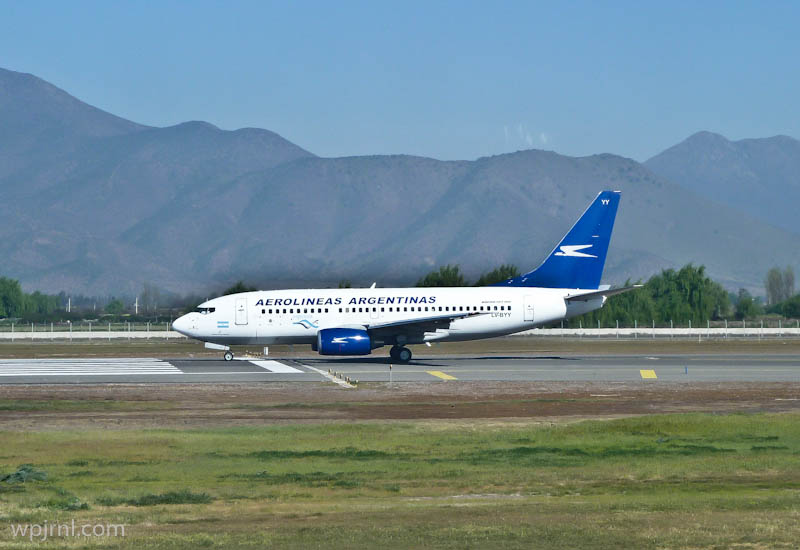
Ministro Pistarini International Airport, Buenos Aires Argentina

Ministro Pistarini International Airport, Buenos Aires Argentina
Argentina’s primary international gateway, serving as a vital hub for air travel in South America.

Ministro Pistarini International Airport, also known as Ezeiza International Airport, is located approximately 35 kilometers southwest of Buenos Aires and serves as Argentina’s main international aviation hub. The airport handles millions of passengers annually and connects Buenos Aires to major cities across the Americas, Europe, and beyond. With modern facilities and efficient operations, it plays a crucial role in Argentina’s tourism and commercial aviation landscape.

Highlights

  • Major international hub connecting Argentina to worldwide destinations
  • Modern terminal infrastructure with contemporary amenities and services
  • Gateway to exploring Buenos Aires and Argentina’s diverse regions

What to Do

  • Catch international flights to explore South America and beyond
  • Utilize airport facilities including restaurants, shops, and lounges during layovers
  • Use the airport as your starting point for exploring Buenos Aires and Patagonia

Best Time to Visit

Year-round, though December to February (summer) and June to August (winter) offer pleasant weather for onward travel within Argentina

Getting There

Located 35km southwest of downtown Buenos Aires; accessible by taxi, remis (private car), bus services, and car rental

Visitor Tips

  • Arrive at least 3 hours before international departures
  • Exchange currency or use ATMs before leaving the airport for competitive rates
  • Check flight schedules in advance as international connections can be lengthy

Nearby

  • Buenos Aires city center and historic neighborhoods
  • La Plata city and museums
  • Estancia (traditional ranch) experiences in surrounding countryside

Whether arriving or departing, Ministro Pistarini International Airport serves as your gateway to Argentina’s vibrant culture, stunning landscapes, and world-class attractions. Begin your South American adventure at this modern, efficient hub that connects Buenos Aires to the world.

Location Map

Ministro Pistarini International Airport, Buenos Aires Argentina Read More »
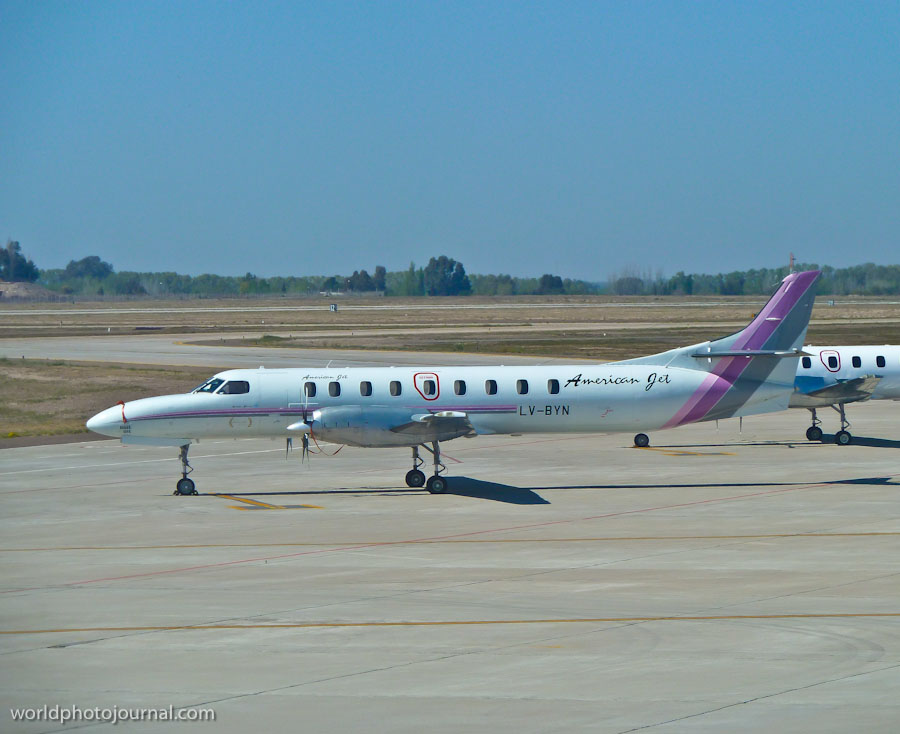
American Jet Aircraft at Rosario International Airport, Argentina

American Jet Aircraft at Rosario International Airport, Argentina
A glimpse of regional aviation connecting Argentina’s vibrant interior with major cities across South America.

Rosario International Airport (Aeropuerto Internacional de Rosario), located in Rosario, Argentina, serves as a vital transportation hub for the Mesopotamia region. This modern facility handles both domestic and international flights, connecting travelers to Buenos Aires, major regional destinations, and international routes. The airport’s strategic location makes it an important gateway for business and leisure travelers exploring Argentina’s second-largest metropolitan area and the surrounding provinces.

Highlights

  • Modern terminal facilities with contemporary passenger amenities
  • Regional and international flight connections via carriers like American Jet
  • Gateway to Rosario’s cultural attractions and the Paraná River region
  • Well-maintained runway infrastructure serving regional aircraft operations

What to Do

  • Depart for Buenos Aires or other major Argentine cities via connecting flights
  • Explore Rosario’s cultural museums and riverside promenades after arrival
  • Visit nearby Paraná Delta wetlands and natural reserves
  • Experience local cuisine and wine regions of the Mesopotamia area

Best Time to Visit

April to October (autumn and spring) offer pleasant weather for travel, avoiding the heat of summer and cold of winter

Getting There

Rosario International Airport is approximately 15 km from downtown Rosario, accessible by taxi, rental car, or bus services

Visitor Tips

  • Arrive at least 2 hours before domestic flights and 3 hours before international flights
  • Check flight schedules in advance as regional services may have limited frequency
  • Use official airport transportation services for safe and reliable transfers to the city

Nearby

  • Rosario City Museum and cultural district
  • Paraná River waterfront and recreational areas
  • Estancia farms offering traditional gaucho experiences
  • Regional wine routes in nearby provinces

Rosario International Airport offers travelers a convenient gateway to one of Argentina’s most dynamic cities and its surrounding cultural treasures. Whether arriving for business or adventure, this modern facility ensures a smooth start to your exploration of Argentina’s vibrant interior.

Location Map

American Jet Aircraft at Rosario International Airport, Argentina Read More »
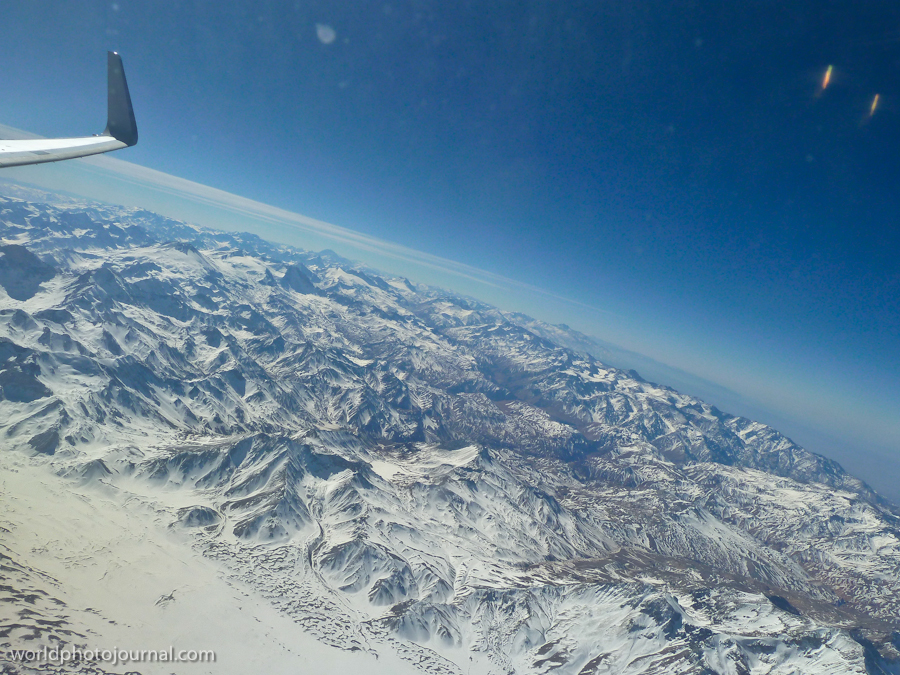
Andes Mountains Aerial View, South America

Andes Mountains Aerial View, South America
A breathtaking aerial perspective of the world’s longest continental mountain range, showcasing snow-capped peaks and dramatic alpine terrain.

The Andes Mountains form the backbone of South America, stretching over 4,000 miles along the western edge of the continent. This aerial view captures the raw majesty of this UNESCO World Heritage-worthy landscape, with its towering snow-covered peaks, deep valleys, and intricate ridgelines carved by millions of years of geological forces. From the window of an aircraft, the Andes reveal their true scale and grandeur, displaying the dramatic topography that has shaped the cultures, ecosystems, and history of the region.

Highlights

  • Snow-capped peaks rising dramatically above the clouds with elevation exceeding 20,000 feet
  • Intricate valley systems and ravines showing the geological complexity of the mountain range
  • Clear alpine air providing exceptional visibility for aerial photography and observation
  • Diverse ecosystems ranging from high-altitude tundra to cloud forests visible from above

What to Do

  • Fly over the Andes on regional flights between major South American cities for unobstructed mountain views
  • Trek through mountain passes and high-altitude trails in Peru, Ecuador, or Colombia
  • Explore ancient Incan sites nestled within the Andean valleys and peaks
  • Visit local indigenous communities and experience traditional mountain culture
  • Photograph the dramatic landscape during sunrise or sunset flights

Best Time to Visit

May to September (dry season in the Southern Hemisphere) offers the clearest skies and best visibility for aerial views, with stable weather conditions throughout the region.

Getting There

Fly on regional airlines operating routes between major cities like Lima, Cusco, Quito, Bogotá, and La Paz. International flights connecting these hubs provide regular opportunities to view the Andes from above.

Visitor Tips

  • Book window seats on early morning flights when visibility is typically best and lighting is optimal for photography
  • Bring a good camera or smartphone with high resolution for capturing the dramatic landscape details
  • Check flight routes in advance to ensure your flight path crosses the highest and most scenic portions of the range
  • Consider altitude sickness when planning ground-based exploration of Andean regions

Nearby

  • Machu Picchu, Peru – iconic Incan citadel in the Eastern Cordillera
  • Lake Titicaca, Peru/Bolivia – world’s highest navigable lake between two Andean nations
  • Cusco, Peru – historic Incan capital city nestled in the Andes
  • Quito, Ecuador – capital city located high in the Andean valleys
  • Torres del Paine, Chile – dramatic granite peaks in the southern Andes

The Andes Mountains from above offer an unforgettable perspective on one of Earth’s greatest natural wonders. Whether you’re flying across South America or planning a ground-based expedition, the stunning alpine scenery and rich cultural heritage of the Andes promise an adventure that will leave you in awe of nature’s magnificent architecture.

Location Map

Andes Mountains Aerial View, South America Read More »

Colorful Beaded Necklaces at Otavalo Craft Market, Ecuador

Colorful Beaded Necklaces at Otavalo Craft Market, Ecuador

A kaleidoscope of handcrafted beaded necklaces awaits at one of South America’s most vibrant indigenous markets.

Tucked high in the Ecuadorian Andes, the Otavalo Market is a feast for the senses, where strands upon strands of colorful beaded necklaces — known locally as ‘collares’ — cascade from market stalls in dazzling rainbows. These traditional adornments are crafted by the Otavaleño people, an indigenous Kichwa community renowned for centuries of textile and jewelry artistry.

Each necklace tells a story: the deep reds, turquoise blues, emerald greens, and amethyst purples reflect both ancestral symbolism and modern flair. Whether worn as everyday accessories by Otavaleña women or sold as treasured souvenirs to travelers, these beads embody the spirit of Ecuador’s craft heritage.

Visiting the market is more than shopping — it’s stepping into a living tradition where bargaining, conversation, and cultural exchange flow as freely as the colors themselves.

Highlights

  • Hundreds of handmade beaded necklaces in every imaginable color
  • Traditional Otavaleño indigenous craftsmanship passed down through generations
  • Plaza de los Ponchos, the heart of the famous Saturday market
  • Opportunity to meet local artisans and learn about their techniques

What to Do

  • Browse the sprawling Plaza de los Ponchos for textiles, jewelry, and crafts
  • Practice your Spanish bargaining skills with friendly vendors
  • Visit nearby Peguche Waterfall for a scenic nature break
  • Sample local Andean cuisine at the food stalls around the market
  • Photograph the vivid colors and cultural scenes (always ask permission first)

Best Time to Visit

Saturdays year-round when the market reaches its peak, ideally during Ecuador’s dry season from June to September.

Getting There

Otavalo is about 2 hours by bus or car from Quito, Ecuador’s capital. Frequent buses depart from Quito’s Carcelén terminal, or you can hire a private driver or join a guided day tour.

Visitor Tips

  • Bring small bills in US dollars — Ecuador’s official currency — for easier transactions
  • Bargaining is expected, but always do so respectfully
  • Arrive early in the morning for the best selection and fewer crowds
  • Wear layers; the Andean highlands can be chilly even on sunny days

Nearby

  • Peguche Waterfall and sacred Kichwa site
  • Cuicocha Crater Lake
  • Cotacachi, famous for leather goods
  • Lake San Pablo with views of Imbabura Volcano

Whether you’re a collector of artisan jewelry, a culture enthusiast, or simply a traveler in search of color and connection, Otavalo Market offers an unforgettable window into Ecuador’s indigenous soul. Slip on a strand of beads, share a smile with an artisan, and carry home a piece of the Andes.

Colorful Beaded Necklaces at Otavalo Craft Market, Ecuador Read More »

Scroll to Top