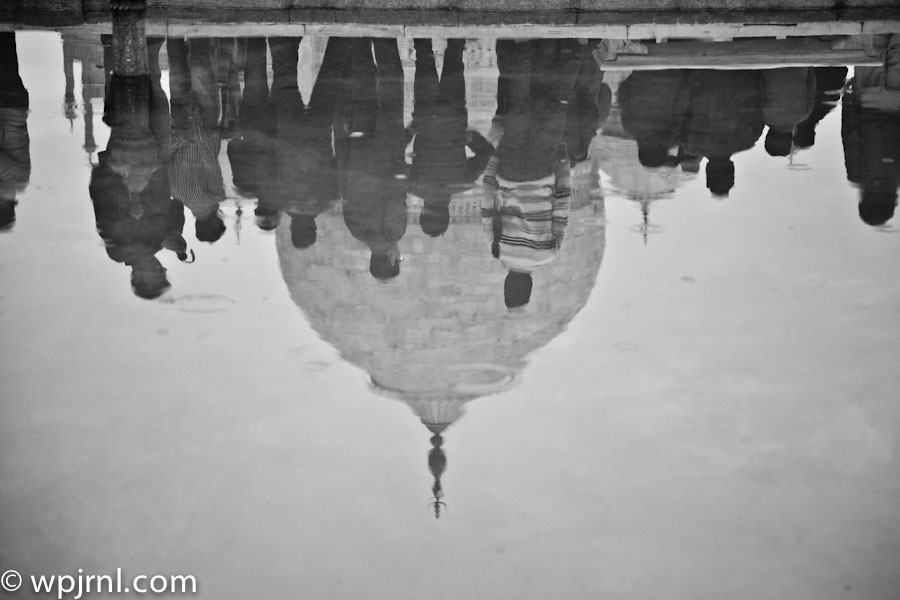
The Taj Mahal stands as a breathtaking testament to eternal love and architectural brilliance on the banks of the Yamuna River in Agra. Built by Mughal Emperor Shah Jahan in memory of his beloved wife Mumtaz Mahal, this ivory-white marble mausoleum transcends its function as a tomb to become a symbol of devotion recognized across the globe. The play of light and reflection, captured beautifully in its mirrored surfaces and surrounding gardens, reveals new dimensions of beauty throughout the day.
Designed by master architects and craftsmen, the Taj Mahal combines elements of Persian, Islamic, and Indian architecture into a harmonious whole. Every detail—from the intricate inlay work to the precisely proportioned dome—was crafted with meticulous care. The monument’s ethereal quality is enhanced by its ever-changing appearance as sunlight shifts, casting it in hues of gold, ivory, and soft pink.
Designated as a UNESCO World Heritage Site, the Taj Mahal attracts millions of visitors annually who come to witness its majesty and contemplate the love story it commemorates. It remains not merely a building, but a profound expression of human emotion rendered in marble and stone.
Highlights
- Stunning white marble exterior with semi-precious stone inlay work depicting floral motifs
- Perfect symmetry and proportions reflecting Mughal architectural principles
- Reflection pools and gardens creating magical mirror images throughout the day
- Interior chamber housing cenotaphs of Shah Jahan and Mumtaz Mahal
- Four minarets positioned at corners providing structural balance and visual grace
What to Do
- Visit at sunrise or sunset to experience the monument in different light and capture stunning photographs
- Explore the Charbagh (four-part garden) with its intricate water channels and pathways
- Study the calligraphy and pietra dura (precious stone inlay) decorations up close
- Visit the mosque and guest house structures flanking the main mausoleum
- Browse the adjacent museum displaying artifacts related to the monument’s history
- Walk along the Yamuna riverbank for alternative views and peaceful contemplation
Best Time to Visit
October to March when temperatures are mild (15-25°C). Avoid monsoon season (July-September) and extreme summer heat. Early morning visits (6-8 AM) offer fewer crowds and magical light for photography.
Getting There
Agra is well-connected by air, rail, and road. Fly into Agra Airport or take trains from Delhi (3-4 hours). From Agra city center, the Taj Mahal is accessible by taxi, auto-rickshaw, or organized tours. Entry is from the south gate (closest) or east and west gates.
Visitor Tips
- Book tickets online in advance to skip queues and save money
- Remove shoes or wear shoe covers inside the mausoleum chamber
- Photography inside the main chamber is prohibited; cameras allowed in gardens and exterior areas
- Hire a licensed guide to learn detailed historical and architectural context
- Visit early morning for fewer crowds and optimal lighting for photographs
- Bring water and wear comfortable walking shoes for exploring gardens
- Respect the sanctity of the site and dress modestly
Nearby
- Agra Fort – impressive red sandstone fortress with royal palaces and gardens
- Fatehpur Sikri – abandoned Mughal city with stunning architecture, 35 km away
- Mehtab Bagh – garden on opposite riverbank offering unique Taj Mahal views
- Itimad-ud-Daulah – smaller marble mausoleum showcasing similar Mughal architecture
Standing before the Taj Mahal, you witness more than architectural brilliance—you encounter a timeless expression of love that has moved hearts for nearly four centuries. The interplay of marble and light, the symmetry of gardens, and the profound story etched into every stone combine to create an experience that transcends language and culture. Whether reflected in still waters at dawn or glowing under moonlight, the Taj Mahal invites you to pause, reflect, and connect with the universal human emotions it so eloquently expresses. A pilgrimage to Agra is a journey into the very essence of beauty and devotion.