Buddhist temple

Swayambhunath Stupa, Kathmandu Nepal

Swayambhunath Stupa, Kathmandu Nepal
An ancient hilltop stupa where colorful prayer flags dance against the Himalayan sky, watched over by the all-seeing eyes of Buddha.

Perched atop a forested hill west of Kathmandu, Swayambhunath is one of the most sacred Buddhist sites in Nepal and one of the oldest religious monuments in the country. Affectionately known as the ‘Monkey Temple’ for the troops of holy primates that roam its grounds, the stupa is a swirling vortex of devotion, ritual, and color where Buddhist and Hindu traditions peacefully intertwine.

From this low-angle view, the gleaming white dome rises like a mountain itself, crowned by the gilded harmika and 13-tiered spire that symbolizes the stages to enlightenment. Strands of prayer flags radiate out in every direction, carrying mantras on the wind across the Kathmandu Valley.

A visit here is as much a spiritual journey as a sightseeing one — pilgrims circumambulate clockwise, spinning prayer wheels and lighting butter lamps in a timeless ritual that has continued for over 1,500 years.

Highlights

  • The iconic white dome topped with the all-seeing eyes of Buddha gazing in four directions
  • Hundreds of multicolored prayer flags fluttering from the central spire
  • Panoramic views over the Kathmandu Valley from the hilltop platform
  • The lively community of resident monkeys that give the temple its nickname
  • Intricate gilded shrines, prayer wheels, and Tibetan-style chortens surrounding the stupa

What to Do

  • Climb the 365 stone steps to the summit for an immersive pilgrimage experience
  • Walk a clockwise kora around the stupa, spinning the copper prayer wheels
  • Watch monks chanting and butter lamps being lit at dawn or dusk
  • Photograph the prayer flags radiating against the brilliant blue Himalayan sky
  • Explore the surrounding monasteries, museum, and Tibetan craft stalls

Best Time to Visit

October to December offers crystal-clear skies, mild weather, and the best mountain views — ideal for photography and outdoor walking.

Getting There

Swayambhunath is about 3 km west of Thamel in central Kathmandu. Easily reached by taxi (15–20 minutes) or a scenic 45-minute walk. Tribhuvan International Airport is roughly 8 km away.

Visitor Tips

  • Arrive early in the morning to avoid crowds and catch soft golden light on the stupa
  • Wear comfortable shoes — the steep stone staircase to the top is a workout
  • Keep food and shiny items secured; the resident monkeys are bold and curious
  • Always walk clockwise around the stupa, as is the Buddhist custom
  • A small entrance fee applies for foreign visitors

Nearby

  • Kathmandu Durbar Square and the historic old city
  • Thamel tourist district for shopping and dining
  • Boudhanath Stupa across the valley
  • National Museum of Nepal at the foot of Swayambhu hill

Whether you come as a pilgrim, a photographer, or a curious traveler, Swayambhunath leaves an indelible impression. Standing beneath those endless ribbons of prayer flags, with the watchful eyes of Buddha above, you sense why this hilltop has drawn the faithful for millennia — and why it remains one of the soul-stirring highlights of any journey through Nepal.

Location Map

Swayambhunath Stupa, Kathmandu Nepal Read More »
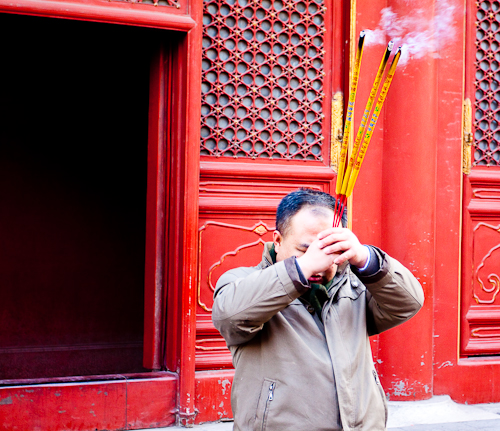
Yonghe Temple Buddhist Temple, Beijing China

Yonghe Temple Buddhist Temple, Beijing China
One of Beijing’s most important Tibetan Buddhist temples, famous for its ornate red architecture and spiritual atmosphere.

Yonghe Temple, also known as the Lama Temple or Palace of Harmony and Peace, is one of the largest and most significant Tibetan Buddhist temples in Beijing. Built in 1694, this stunning architectural complex showcases vibrant red walls, intricate wooden carvings, and golden roof ornaments that represent centuries of Buddhist tradition. The temple remains an active place of worship where visitors and pilgrims come to pay respects, light incense, and experience authentic Buddhist spiritual practices in the heart of Beijing’s historic district.

Highlights

  • Ornate red wooden halls and gates with detailed traditional Chinese architectural carvings
  • Massive golden Buddha statues and intricate Buddhist religious artwork throughout the complex
  • Active incense-burning ceremonies where visitors participate in prayer rituals
  • Lively courtyard scenes with monks, pilgrims, and cultural practitioners engaging in spiritual activities

What to Do

  • Light incense sticks and participate in prayer ceremonies at the temple’s main halls
  • Explore the multiple courtyards and pavilions filled with Buddhist sculptures and artwork
  • Observe monks in their daily routines and learn about Tibetan Buddhist traditions
  • Purchase incense, prayer beads, and religious artifacts from temple vendors
  • Photograph the stunning red architecture and golden decorative elements

Best Time to Visit

Spring (April-May) and autumn (September-October) offer pleasant weather and fewer crowds than summer months. Chinese New Year celebrations bring special energy to the temple.

Getting There

Located in the Dongcheng District, easily accessible by subway Line 2 (Yonghegong Lama Temple Station). Also reachable by bus or taxi from Beijing’s central areas.

Visitor Tips

  • Arrive early in the morning for a more peaceful and authentic experience with fewer tourists
  • Dress respectfully when visiting active temple areas; avoid shorts and sleeveless clothing
  • Purchase incense at the temple entrance for a modest fee to participate in prayer rituals
  • Respect photography rules—some inner sanctums prohibit photos; always ask permission before photographing monks

Nearby

  • Confucius Temple and Imperial College, adjacent to Yonghe Temple
  • Jingshan Park with views over the Forbidden City
  • Hutong neighborhoods with traditional Beijing courtyard residences

A visit to Yonghe Temple offers a rare window into Beijing’s spiritual heart and living Buddhist traditions. Whether you come to light incense, admire the architectural splendor, or simply absorb the peaceful energy of this sacred space, Yonghe Temple promises an unforgettable cultural experience that connects you to centuries of Chinese spiritual heritage.

Location Map

Yonghe Temple Buddhist Temple, Beijing China Read More »

Scroll to Top