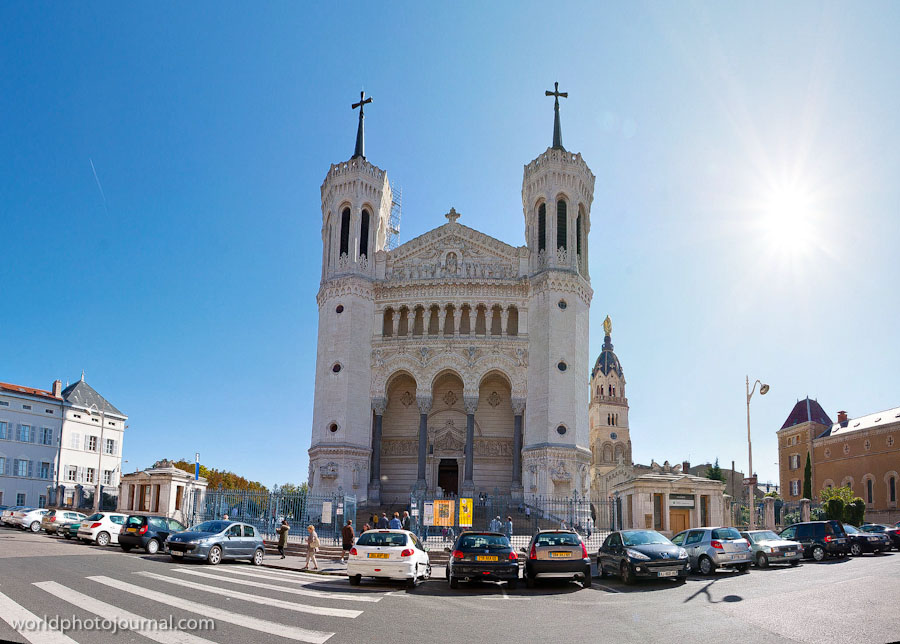
The Basilica of Notre-Dame de Fourviere stands as one of France’s most iconic religious monuments, dominating the Lyon skyline from its elevated position on the Fourviere Basilica. Built between 1872 and 1946, this magnificent white stone basilica showcases extraordinary Romano-Byzantine architecture with its twin towers crowned by golden crosses. The basilica’s gleaming white facade, intricate stone detailing, and commanding presence make it one of Europe’s most visually striking churches. Whether you’re a devout pilgrim, architecture enthusiast, or curious traveler, this sacred space captivates visitors with its grandeur and spiritual atmosphere. The basilica serves as a major pilgrimage site and a symbol of Lyon’s rich religious heritage, attracting thousands of visitors annually who seek both spiritual solace and architectural appreciation.
Highlights
- Twin bell towers with distinctive Romano-Byzantine architecture and golden crosses
- Interior adorned with stunning mosaics, stained glass, and ornate decorative elements
- Panoramic terrace offering breathtaking 360-degree views of Lyon and the surrounding region
- Underground basilica (crypt) with its own altar and religious artwork
- Illuminated facade that transforms beautifully at night, creating a magical atmosphere
What to Do
- Climb to the basilica’s panoramic terrace for sweeping views of Lyon, the Rhône and Saône rivers, and distant mountains
- Explore the interior and admire the intricate mosaics, stained glass windows, and marble decorations
- Visit the underground crypt basilica and light a candle in prayer or reflection
- Attend a religious service or evening illumination ceremony for a spiritually uplifting experience
- Walk the surrounding gardens and pathways for peaceful contemplation and photography opportunities
Best Time to Visit
Spring (April-May) and fall (September-October) offer pleasant weather and fewer crowds. Summer brings vibrant light and extended visiting hours, while winter’s evening illumination creates a magical atmosphere.
Getting There
Take the funicular railway (Fourviere funicular) from Vieux Lyon directly to the basilica entrance, or drive and use the basilica’s parking area. Regular city buses and taxis also serve the location.
Visitor Tips
- Arrive early morning to enjoy the site with fewer crowds and optimal lighting for photography
- Wear comfortable walking shoes, as the basilica is situated on a hill with stairs and inclined pathways
- The funicular railway is efficient and offers a scenic journey up the hillside
- Modest dress is recommended when visiting the basilica as it remains an active place of worship
- Don’t miss the evening illumination when the white facade glows beautifully against the night sky
Nearby
- Vieux Lyon (Old Town) with Renaissance buildings and historic streets
- Musée de Fourviere with religious and historical artifacts
- Roman theaters of Lyon (Theatre Romain)
- Confluence Museum (Musée Confluence) with contemporary exhibits
- Saint-Jean Cathedral in the heart of Old Town
The Basilica of Notre-Dame de Fourviere is more than just an architectural masterpiece—it’s a spiritual landmark that has inspired pilgrims and captivated visitors for generations. Standing before this magnificent white basilica, perched majestically above Lyon’s charming streets, you’ll understand why it remains one of France’s most revered religious sites. Whether you seek spiritual reflection, architectural wonder, or simply stunning views across one of France’s greatest cities, a visit to this extraordinary basilica promises an unforgettable experience that will leave you in awe of both human craftsmanship and sacred beauty.